If your dog or cat has a spay and neuter surgery coming up, it is normal to feel a little nervous handing them over at the front desk. Knowing exactly what happens before, during, and after the procedure takes most of that worry away, and it helps you prepare your pet for a smoother recovery. This guide walks you through the full surgery day from the night before to the day the incision is healed, written by the team at C.H. Veterinary Clinic, the veterinarian near me many Fresno families trust for routine dog and cat surgery.
Why It Helps to Know the Spay and Neuter Surgery Process
Spaying and neutering are among the most common veterinary surgeries, but every step, from fasting to the cone, exists to keep anesthesia safe and the incision clean. Owners who understand the process follow instructions more closely, notice problems sooner, and stay calmer, and pets pick up on that calm.
Before Surgery: Preparing Your Pet
The Pre-Surgical Exam
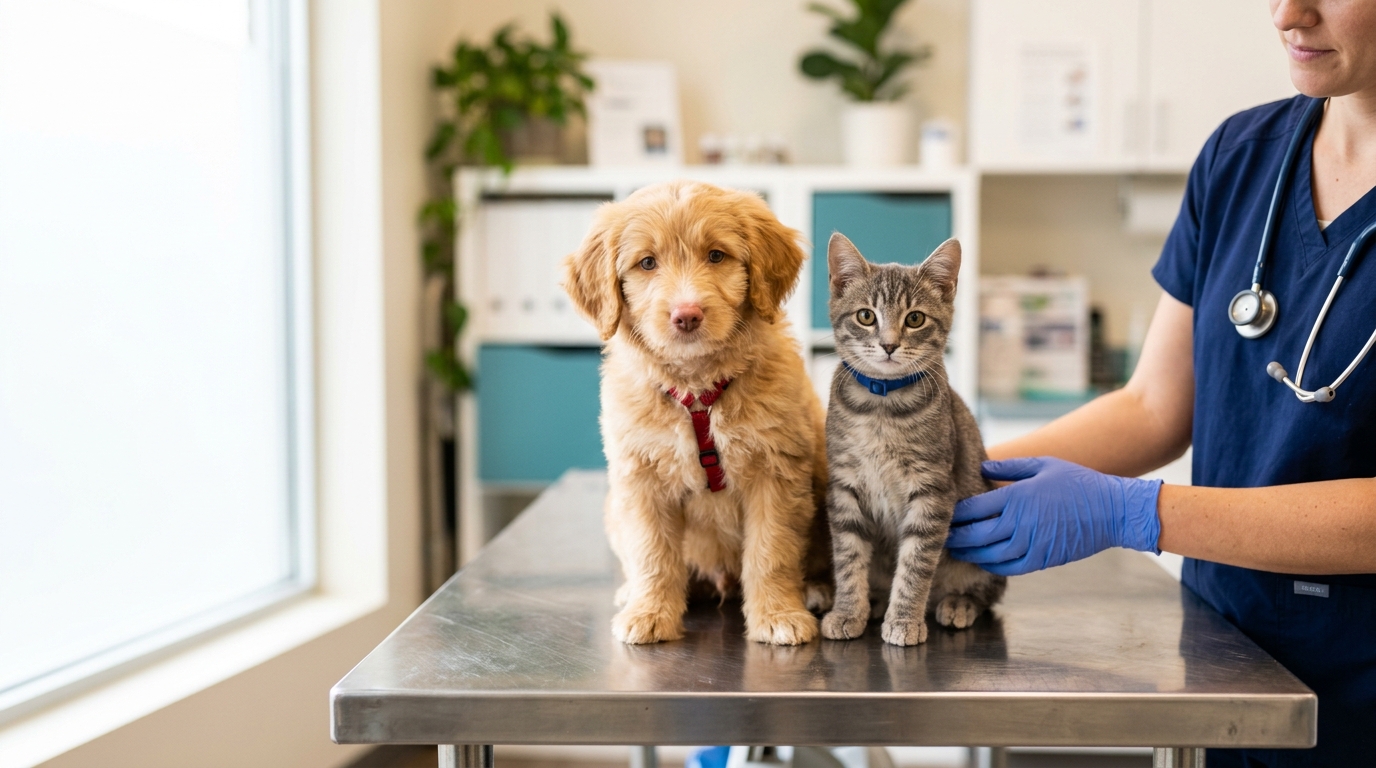
Every procedure for spay and neuter in Fresno, CA at our clinic begins with a hands-on exam. Your veterinarian checks your pet’s heart, lungs, weight, and overall condition, and confirms details that affect the plan. For males, that includes making sure both testicles have descended. For females, it includes asking whether she is currently in heat.
It is also the right time to discuss timing and any health history that might change the anesthesia plan.
Pre-Anesthetic Bloodwork
Before any anesthesia, we run in-house bloodwork to check organ function and blood counts. A pet can look healthy and still have a hidden kidney or liver issue, so at C.H. Veterinary Clinic this screening is part of every procedure, not an optional extra.
Vaccines and Parasite Control
Make sure your pet is current on core dog vaccinations or cat vaccines, and treat for fleas ahead of time. Fleas crawling around a fresh incision are the last thing you want during recovery.
The Night Before
| Task | When | Why It Matters |
|---|---|---|
| Give your pet a bath | 1 to 2 days before | No bathing is allowed for about two weeks after surgery |
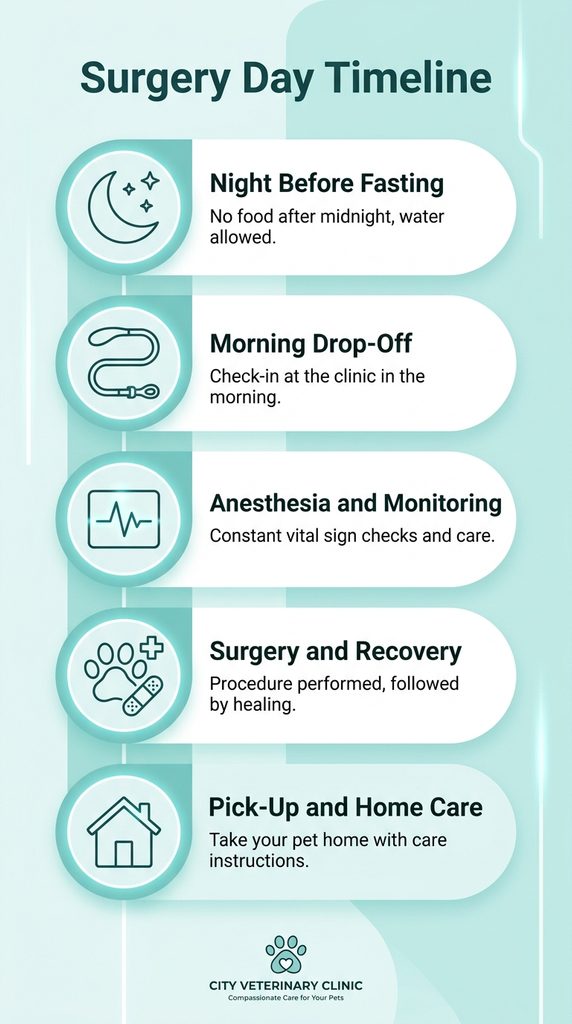
| Withhold food | As instructed, usually from the night before | An empty stomach lowers the risk of vomiting under anesthesia |
| Leave water available | Until your clinic says otherwise | Keeps your pet hydrated |
| Keep cats indoors | The night before | Prevents hunting or snacking outside |
| Pick up stray food | The night before | Counter-surfing dogs can undo a fast in seconds |
| Set up a recovery space | Before surgery day | A quiet room ready for their return |
Always follow the exact fasting instructions your clinic gives you. Very young puppies and kittens, and pets with conditions like diabetes, may need a different plan.
Surgery Morning: Drop-Off and Check-In
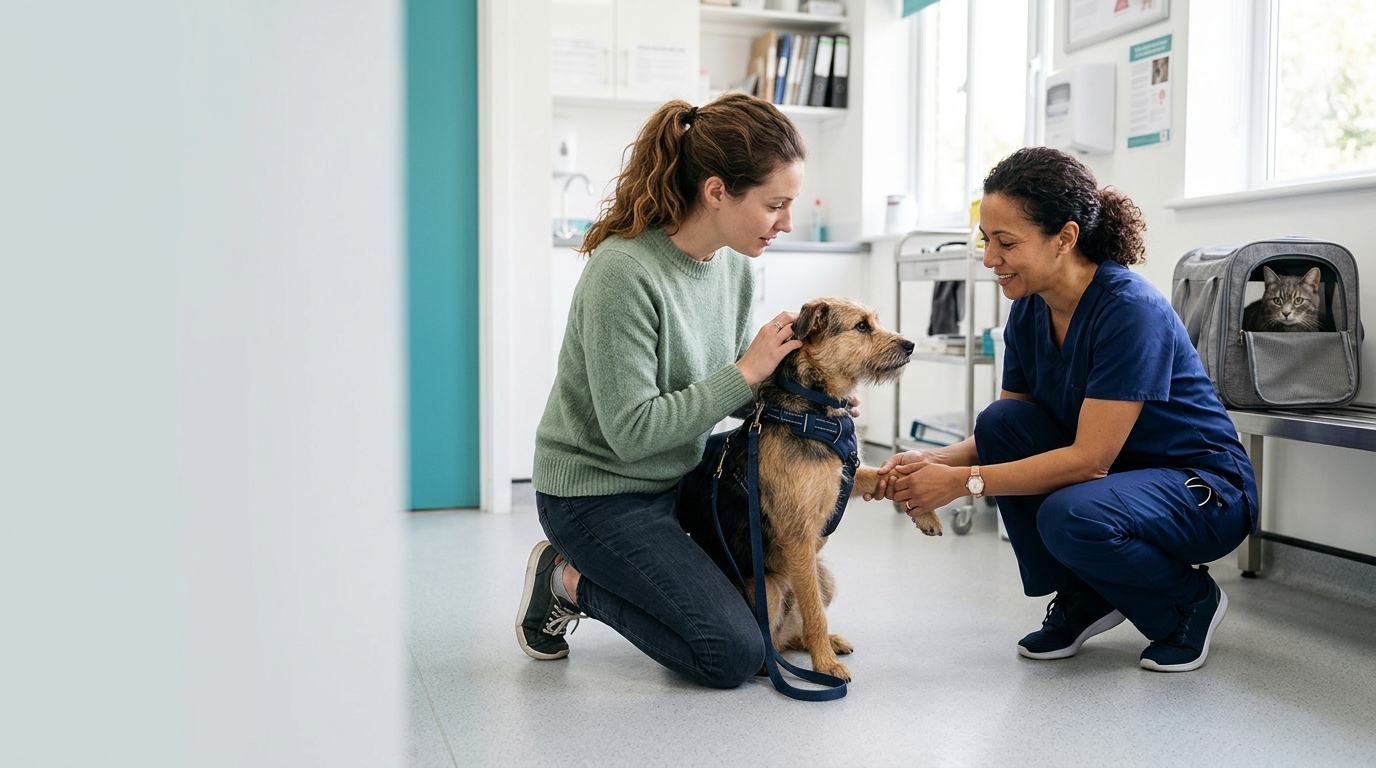
Arrive on time with dogs on a secure leash and cats in a closed carrier. Bring a list of any medications your pet takes, and keep your phone on so the team can reach you.
At check-in, you will review and sign a consent form. Before you leave, ask these five questions:
- What time should I expect a call with an update?
- What pain medication will my pet receive during and after surgery?
- Will the incision have external stitches that need removing, or absorbable sutures?
- Does my pet need a cone, and will you fit it before pick-up?
- When is the best time to pick up my pet?
During Surgery: How Vets Spay and Neuter a Dog or Cat
Many owners search for how to spay and neuter a dog because they want to understand what their pet goes through. This is veterinary surgery performed only by a licensed veterinarian under sterile conditions, but here is what happens behind the doors, step by step.
Pre-Medication and Anesthesia
Your pet first receives medication to ease anxiety and begin pain control before surgery even starts. Next comes general anesthesia, and a breathing tube is typically placed to protect the airway and deliver oxygen and anesthetic gas.
The protocol is matched to your pet’s age, breed, weight, and health. Throughout the procedure, heart rate, breathing, oxygen levels, and temperature are watched closely. The American Animal Hospital Association anesthesia guidelines stress continuous monitoring because it lets the team respond to changes right away.
Surgical Preparation
The surgical site is shaved, scrubbed with antiseptic, and covered with sterile drapes, and the surgeon uses sterilized instruments. The shaved patch grows back within weeks.
The Spay Procedure
For a female, the veterinarian makes an incision along the midline of the belly, locates the ovaries and uterus, and ties off the blood vessels supplying them before removing the tissue. The incision is then closed in layers: the muscle wall, the tissue under the skin, and the skin itself. Many incisions are closed with absorbable sutures hidden under the skin, while others use external stitches that are removed later.
The Neuter Procedure
For a male dog, the veterinarian usually makes one small incision just in front of the scrotum, removes both testicles, and ties off the blood vessels and cords. For a male cat, two tiny incisions are made on the scrotum and are often left to heal on their own without stitches. If a testicle has not descended, the surgeon may need to search the groin or abdomen, which makes the procedure longer.
Dog vs. Cat Surgery Day Differences
| Factor | Dogs | Cats |
|---|---|---|
| Spay approach | Abdominal incision | Abdominal incision, usually smaller |
| Neuter approach | One incision in front of the scrotum | Two small scrotal incisions |
| Stitches after neuter | Usually present | Often none |
| Typical activity restriction | About 10 to 14 days | Often shorter after a neuter |
| Litter or potty tips | Leash-only bathroom breaks | Paper-based litter for the first days |
After Surgery: Waking Up and Going Home
Monitored Recovery at the Clinic
After surgery, your pet is moved to a warm, quiet recovery area and watched closely until breathing, temperature, and alertness return to normal. Pain management continues here too.
The Discharge Conversation and Ride Home
At pick-up, you will receive written aftercare instructions and any take-home pain medication. Confirm when the next dose is due and when your recheck should happen. On the ride home, lift larger dogs by supporting the chest and hindquarters, avoiding the belly, and keep cats in their carrier on a soft towel.
The First 24 Hours at Home
- Settle your pet in a quiet room away from stairs, children, and other pets.
- Offer water and a small meal only as your discharge instructions direct.
- Take dogs out on a leash for short bathroom breaks only.
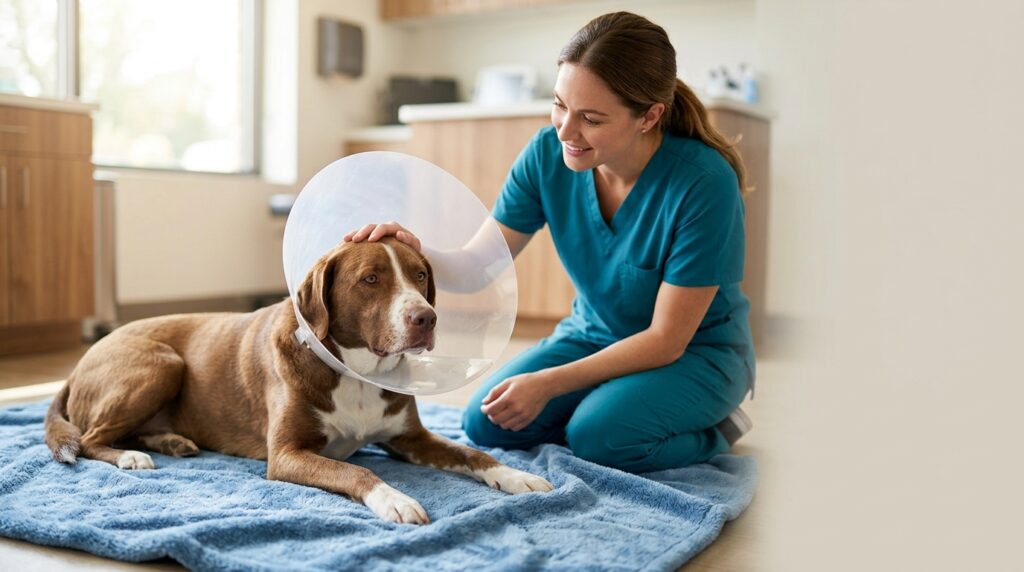
- Keep the cone on, even if your pet protests.
- Expect some grogginess, whining, or mild shivering as anesthesia wears off.
Most pets are noticeably brighter by the next morning.
Days 2 to 14: The Healing Window
Most complications happen here, because pets feel better long before the incision has healed.
| Timeframe | What Is Normal | What Is Not Normal |
|---|---|---|
| Days 1 to 3 | Mild redness, slight swelling, sleeping more | Bleeding, pus, or a gaping incision |
| Days 4 to 7 | Appetite and energy returning | Swelling that gets larger or feels hot |
| Days 8 to 14 | Incision looks closed and pale pink | Licked, scabbed, or reopened areas |
Keep activity restricted the entire time: no running, jumping, stairs, or rough play. Keep the incision dry, with no baths or swimming. Check it once a day, give pain medication on schedule, and keep the cone on, because licking is the most common cause of complications. The ASPCA gives similar advice, recommending a calm, indoor recovery for up to two weeks.
If your pet has external stitches, plan a dog follow-up vet appointment or cat recheck about 10 to 14 days after surgery so the incision can be checked and stitches removed.
Warning Signs That Need a Vet Visit
Call (559) 292-7393 if you notice:
- Swelling, discharge, or bleeding at the incision
- An incision that has opened
- Vomiting that does not stop
- Lethargy that is not improving
- Refusing food for more than a day
- Pale gums or labored breathing
When something seems off during recovery, our urgent care vet near me service means your pet can usually be seen quickly rather than waiting for the next open slot. For serious problems outside clinic hours, go to the nearest emergency veterinary hospital.
Choosing an Animal Spay and Neuter Clinic in Fresno
Searching “spay neuter clinic near me” or “dog spay near me” brings up plenty of choices, and they do not all run surgery day the same way. A trustworthy animal spay and neuter clinic should offer:
- A pre-surgical exam with time for your questions
- Pre-anesthetic bloodwork for every patient
- Anesthesia tailored to your pet, with monitoring throughout
- Pain management before, during, and after surgery
- Written aftercare instructions and a clear way to reach the team
Experience matters too. Our surgeries are performed by veterinarians including Dr. Hagus, a UC Davis graduate who completed her internship and residency at Texas A&M University. If you are still deciding where routine veterinary surgery should happen, our guide on the difference between a veterinary clinic and hospital explains what each setting offers. The AVMA also recommends discussing the benefits and risks of the procedure with your veterinarian before scheduling.
Schedule Your Pet’s Pre-Surgical Exam
Our team will walk you through every step of surgery day. Visit C.H. Veterinary Clinic at 2588 N Temperance Ave, Fresno, CA 93727, or call (559) 292-7393 to book your pet’s pre-surgical exam.
Frequently Asked Questions
-
Can my dog drink water before spay or neuter surgery?
In most cases, yes. Healthy adult dogs and cats can usually keep water available until the morning of surgery, while food is withheld from the night before. Your clinic may give different instructions for very young puppies and kittens, small breeds prone to low blood sugar, or pets with medical conditions such as diabetes. Always follow the exact fasting and water guidance your veterinarian provides, and call the clinic if your pet accidentally eats before surgery.
-
How long will my pet stay at the clinic on surgery day?
Most pets are dropped off in the morning and go home later the same day. The surgery itself is only one part of the visit. Your pet also needs time for the exam, pre-anesthetic bloodwork, anesthesia, and monitored recovery until they are awake and stable. Neuters are generally quicker than spays, and cats often recover faster than dogs. Your veterinary team will call with an update and tell you when your pet is ready to be picked up.
-
Will my pet be in pain after spay and neuter surgery?
Your pet will feel some soreness, but pain should be well controlled. A good clinic starts pain management before surgery, continues it during the procedure, and sends medication home for the first several days. Give every dose on schedule, even if your pet seems comfortable, because pets often hide discomfort. Contact your veterinarian if your pet cries out when touched, refuses to move, stops eating, or seems more uncomfortable as the days go on rather than less.
-
When can my dog go back to normal activity?
Most dogs need about 10 to 14 days of restricted activity after a spay or neuter. That means leash-only walks, no running, no jumping on furniture, and no rough play with other dogs. Many dogs feel energetic within a few days, which is exactly when owners need to be most careful. Returning to full activity too early can open the incision or cause swelling. Wait until your veterinarian confirms the incision has healed before your dog resumes normal play.
-
Does my pet really need a cone after being spayed or neutered?
Yes, in almost every case. Licking is the most common cause of incision problems, and a pet can damage stitches or introduce bacteria in just a few minutes. The cone should stay on day and night until the incision has fully healed, usually around 10 to 14 days. Soft or inflatable cones work well for some pets. If your pet cannot eat or drink comfortably while wearing it, ask your veterinarian about the best fit.
-
How do I find a trusted spay neuter clinic near me in Fresno?
Look for a clinic that performs a pre-surgical exam, runs pre-anesthetic bloodwork on every patient, monitors anesthesia throughout surgery, and sends your pet home with pain medication and written aftercare instructions. Check the credentials of the veterinarians performing the procedure, read local reviews, and call with questions before booking. Fresno pet owners can reach C.H. Veterinary Clinic on N Temperance Ave at (559) 292-7393 to schedule a pre-surgical consultation.
A calm, well-prepared surgery day is the first step toward a quick recovery and a longer, healthier life for your pet.