If you have compared an animal hospital near me in Fresno with a “vet clinic near me” and wondered whether the two words mean different things, you are not alone. The labels get used almost interchangeably, yet they can point to very different levels of care. This guide explains what actually separates an animal hospital from a vet clinic, what a full-service practice should offer your dog or cat, and how to know when your pet needs to be seen the same day instead of waiting for a routine appointment.
Animal Hospital vs Vet Clinic: What’s Actually Different?
Here is the honest answer most articles skip: there is no strict legal line between the two terms in California, and many practices use them loosely. What matters is not the word on the sign, it is the range of services and the level of on-site capability behind it. Still, the labels carry general expectations, and understanding them helps you ask sharper questions.
What people usually mean by “vet clinic”
A vet clinic typically suggests a practice built around outpatient care: wellness exams, vaccinations, routine diagnostics, dental work, and common procedures. Pets come in, are seen, and go home the same day. Many clinics are excellent and handle the vast majority of what a dog or cat needs across a lifetime. The word “clinic” simply hints at day-visit, primary-care medicine rather than extended hospitalization.
What people usually mean by “animal hospital”
“Animal hospital” often implies a broader setup, sometimes including the ability to keep patients for monitoring, more advanced diagnostics, surgical suites, and a wider service menu. In practice, plenty of businesses called “clinic” offer hospital-level services, and plenty called “hospital” run as day practices. The name is a starting clue, not a guarantee of anything.
Why the labels blur in real life
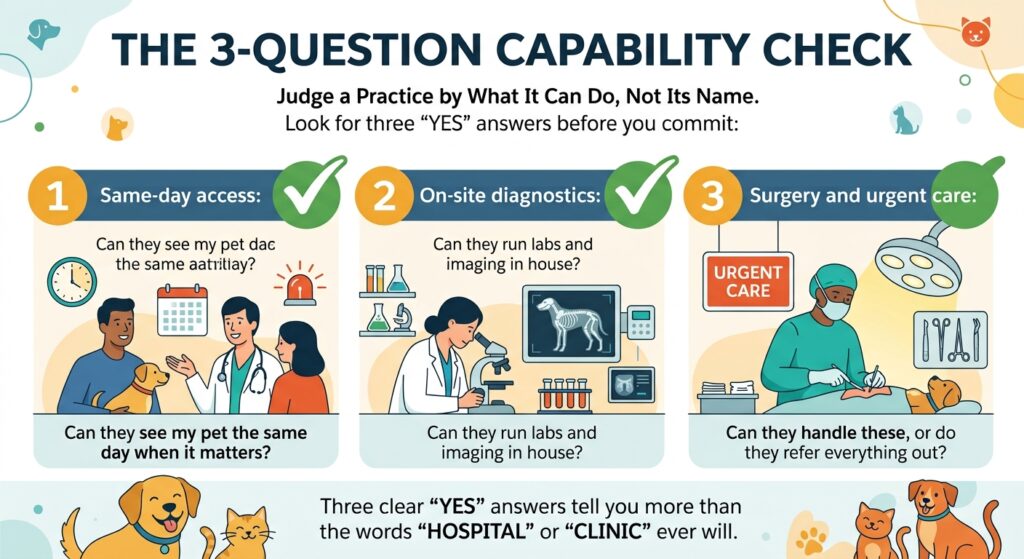
Because neither term is tightly regulated, the only reliable way to judge a practice is to look at what it can actually do. Two questions cut through the confusion: what services are offered on site, and what happens when your pet needs urgent attention. Everything else is branding. If you want the full method for sizing up a practice, our guide on how to choose the best vet in Fresno walks through the complete checklist.
What a Full-Service Practice Should Offer
Rather than chasing a label, look for capability. A strong small animal practice covers three layers of care, and the presence of all three matters far more than whether it calls itself a clinic or a hospital.
Preventive and routine care
This is the foundation: physical exams, vaccines matched to lifestyle, parasite control, dental care, and nutrition guidance. Preventive medicine is where most health problems get caught early, and it is the reason a steady practice beats hopping between unfamiliar providers. Consistent records let a team notice small changes before they turn into big ones, which is exactly the point the AVMA’s guidance on choosing a veterinary practice stresses.
On-site diagnostics, and why same-day answers matter
When a pet is unwell, the speed of information changes everything. A practice with in-house bloodwork and on-site imaging can often tell you what is wrong during the visit rather than sending samples away for days. For a vomiting dog or a lethargic cat, same-day results can mean same-day treatment, and that capability is what separates a well-equipped practice from a bare-bones one.
Surgical and urgent capability
The third layer is the ability to act: perform surgery when needed, stabilize a sick or injured animal, and manage urgent problems without automatically sending them elsewhere. This is where the full range of veterinary services a practice actually lists becomes a practical measure of how much it can do for you under one roof.
Vet Clinic vs Animal Hospital vs Emergency Hospital
These categories overlap, but they solve different problems. Knowing which is which saves precious time when your pet is unwell.
| Feature | Primary care (clinic or animal hospital) | 24/7 emergency hospital |
|---|---|---|
| Best for | Wellness, illness, same-day and urgent concerns | Life-threatening, after-hours crises |
| Knows your pet | Yes, ongoing relationship and records | No, first-time visit |
| Availability | Daytime and scheduled, plus same-day slots | Around the clock, no appointment needed |
| On-site diagnostics | Commonly yes | Yes, built for critical cases |
| Follow-up | Coordinated with your pet’s records | Stabilizes, then refers back to your vet |
Your regular practice and an emergency hospital are partners, not rivals. The clinic you build a relationship with handles the day-to-day and most urgent same-day needs, while a dedicated 24/7 emergency hospital exists for the genuine crises that strike at 2 a.m. Knowing both in advance means you never have to figure it out mid-panic.
Same-Day Vet Care: When Your Pet Should Be Seen Quickly
Not every problem can wait for the next open appointment, and not every problem is a full emergency. Learning to tell the difference helps you act fast without overreacting.
Signs that need same-day (urgent) attention
Some symptoms are not immediately life-threatening but should not sit for days. Reach out for same-day vet care in Fresno if your dog or cat shows any of these:
- Repeated vomiting or diarrhea within a single day
- Refusing food or water for 24 hours
- Sudden limping or reluctance to move
- A minor wound, mild swelling, or a suspected ear or eye infection
- Straining in the litter box or unusual bathroom habits
- Noticeable lethargy or hiding that is out of character
Signs that are a true emergency
Other signs mean go now, ideally to a facility ready for critical cases. Do not wait for a callback if you see difficulty breathing, collapse, seizures, a suspected poisoning, uncontrolled bleeding, a hard bloated belly, an inability to urinate, or trauma from a fall or a car. The AVMA lists the animal emergencies that need immediate veterinary care, and knowing basic pet first aid can help you keep your pet stable on the way there.
What is usually fine to schedule normally
Routine matters can wait for a standard slot: annual wellness exams, vaccine boosters, dental cleanings, mild itching that has been going on for a while, or a slightly overdue nail trim. Booking these ahead keeps your pet on track without tying up urgent capacity for pets that genuinely cannot wait.
When in doubt, call. A quick phone call to your practice is the fastest way to sort urgent from routine. Describe what you are seeing, and the team can tell you whether to come in today, head to an emergency hospital, or book a normal visit. You never lose anything by asking, and a two-minute call can save hours of worry.
How to Decide Where to Take Your Dog or Cat in Fresno
Put it together into a simple decision. During the day, your regular practice is almost always the right first call for anything urgent but not catastrophic, because they know your pet and can often see you the same day. For clear, life-threatening emergencies, especially overnight, go straight to a 24/7 emergency hospital. For everything routine, schedule ahead and keep up with preventive care. Dogs and cats differ here too: cats hide illness longer and can look “fine” until a problem is advanced, so lean toward calling sooner for a cat that seems off.
A Real-World Example: A Fresno Cat That Couldn’t Wait
Consider a common scenario. A Fresno family notices their male cat straining in the litter box and producing almost nothing over an afternoon. It looks minor, maybe constipation. In male cats, though, this can signal a urinary blockage, which becomes life-threatening within hours.
Because the family had already chosen a nearby practice and knew how same-day requests worked, they called right away, described the signs, and were told to come in immediately. On-site diagnostics confirmed the blockage, and treatment began the same day. Owners without a regular vet might have waited to “see if it passes,” searched around while the clock ran, and faced a far worse outcome. The lesson is twofold: learn the urgent signs, and have a practice chosen before you need it. You can meet our Fresno veterinary team ahead of time, so the first call in a crisis goes to people who already know you and your pet.
Choosing Your Practice Before You Need It
The best time to sort all of this out is on a calm day, not during an emergency. Pick a nearby small animal practice, book an introductory wellness visit, and confirm how they handle same-day and urgent concerns. Learning what accreditation means and asking about on-site diagnostics will tell you how much a practice can manage without a referral.
C.H. Veterinary Clinic is a small animal practice at 2588 N Temperance Ave in Fresno, caring for dogs and cats with preventive care, on-site diagnostics, and same-day options in one place. When you are ready, book a vet appointment in Fresno or call (559) 292-7393.
Frequently Asked Questions
-
Is an animal hospital better than a vet clinic?
Not necessarily. Neither term is strictly regulated, so the name on the door does not guarantee a level of care. What matters is capability: the range of services offered, whether diagnostics are run on site, and how urgent problems are handled. Many practices called “clinic” provide hospital-level medicine, and some called “hospital” operate as day practices. Judge a place by what it can actually do, not by its label.
-
What counts as a same-day or urgent vet visit?
An urgent visit involves a problem that is not immediately life-threatening but should not wait days, such as repeated vomiting, refusing food for a day, sudden limping, a minor wound, or straining in the litter box. These deserve a same-day call to your practice. If your pet seems otherwise stable but clearly off, phone the clinic, describe the signs, and let the team decide whether you should come in today.
-
When should I go straight to an emergency vet instead?
Go immediately to a 24-hour emergency hospital for life-threatening signs: difficulty breathing, collapse, seizures, suspected poisoning, uncontrolled bleeding, a hard bloated belly, an inability to urinate, or trauma from a fall or vehicle. These cannot wait for a routine callback. Call ahead if you can, so the team is ready when you arrive, and keep your pet as calm and still as possible during the trip.
-
Does a regular vet clinic handle emergencies?
Many primary-care practices manage urgent same-day problems during their available times and can stabilize a sick or injured pet. What they usually do not provide is overnight, around-the-clock critical care, which is what a dedicated emergency hospital is built for. The ideal setup is a regular practice you use for daily and urgent needs, paired with knowing which 24/7 emergency hospital to use after hours.
-
How do I get a same-day vet appointment in Fresno?
Call your practice as early in the day as you can and clearly describe your pet’s symptoms, since urgent slots fill quickly. An established relationship helps, because a clinic that already knows your dog or cat can prioritize and prepare. If you do not yet have a regular vet, choose one now and ask how they handle same-day requests, so the answer is ready long before you ever need it.
-
Do dogs and cats need different urgent care?
Yes, in important ways. Cats are experts at hiding illness and often look normal until a problem is advanced, so subtle changes in a cat deserve a quicker call. Dogs tend to show symptoms sooner but carry their own urgent risks, like bloat in deep-chested breeds. A practice comfortable with both species assesses and handles them differently, which is another good reason to choose a clinic experienced with your specific pet.
Sorting out where to go on a calm day is the simplest way to stay calm on the hard one, so choose your practice and save the number today.