
Dog & Cat Vaccinations in Fresno, CA
Core and Lifestyle Vaccines Matched to Your Pet
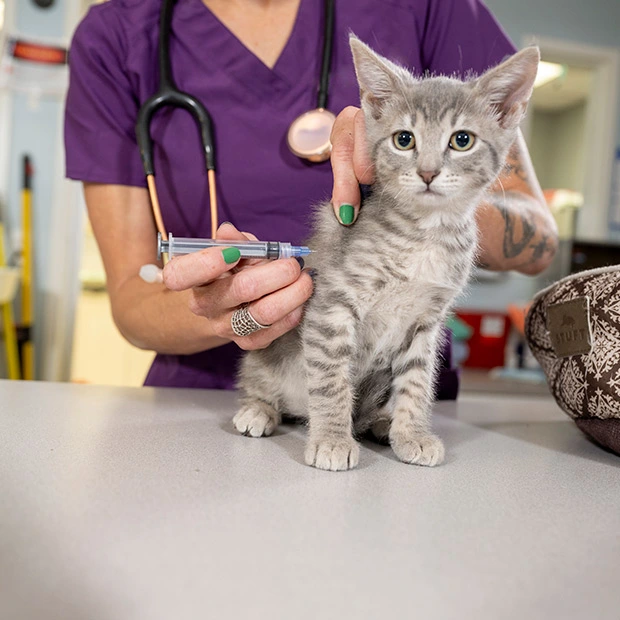
Vaccination is one of the most effective tools in veterinary medicine, and it is not one-size-fits-all. The right set of vaccines depends on your pet’s species, age, health, and how they actually live, since a dog that hikes and boards faces different risks than a cat that never leaves the house.
If you have been looking for dog and cat vaccinations near me in Fresno, C.H. Veterinary Clinic builds a protocol around your specific pet at 2588 N Temperance Ave, rather than running every animal through the same list.
Core vs. Lifestyle Vaccines
Vaccines fall into two groups. Core vaccines protect against diseases that are widespread, dangerous, or a risk to people, and every dog and cat should have them. Lifestyle vaccines are recommended based on exposure, so we match them to your pet’s real risk instead of defaulting them on or off.
The point of the wellness conversation is to get this right: enough protection for the risks your pet actually faces, without vaccinating for exposures they will never have.
Dog Vaccinations
Owners searching for dog vaccinations in Fresno CA can expect the following framework.
Core dog vaccines:
- Rabies — required by law, fatal, and transmissible to humans
- DHPP — distemper, hepatitis (adenovirus), parvovirus, and parainfluenza in one combination
- Parvovirus in particular is a severe, often fatal disease in unvaccinated puppies
Lifestyle dog vaccines, based on exposure:
- Bordetella (kennel cough) — for dogs that board, attend daycare, are groomed, or visit dog parks
- Leptospirosis — for dogs exposed to wildlife, standing water, or rural properties, and it is transmissible to people
- Canine influenza — for dogs in social or boarding settings
- Rattlesnake vaccine — worth discussing for dogs on foothill and rural properties in our area
Cat Vaccinations
For cat vaccinations near me, the same core-and-lifestyle logic applies.
Core cat vaccines:
- Rabies — required and fatal
- FVRCP — feline viral rhinotracheitis, calicivirus, and panleukopenia, all highly contagious
Lifestyle cat vaccines, based on exposure:
- FeLV (feline leukemia) — recommended for cats that go outdoors or live with an FeLV-positive cat; core for all kittens
Indoor-only cats still need core vaccines. Cats escape, and a rabies exposure or a boarding stay can happen with no notice.
Puppy and Kitten Vaccine Schedule
Young animals need a series, not a single visit, because the antibodies they get from their mother interfere with vaccine response and fade at an unpredictable age. A series covers that window so there is no gap in protection.
| Age | Typical vaccines |
|---|---|
| 6–8 weeks | First DHPP (puppy) / first FVRCP (kitten) |
| 10–12 weeks | Second combination; FeLV for kittens |
| 14–16 weeks | Final combination; rabies |
| Adult | Boosters on the schedule each vaccine requires |
Puppies are not reliably protected against parvovirus until the series is complete, so keep them away from dog parks and unknown dogs until then.
Parasite Prevention
Vaccines are only half of preventive care in the Central Valley, where mild winters keep parasites active most of the year.
- Heartworm, spread by mosquitoes, is prevented with a monthly or injectable product and is far easier to prevent than to treat. We confirm status with an in-house heartworm test before starting prevention.
- Fleas and ticks carry their own diseases and are a year-round issue locally, not a summer-only one.
- Intestinal parasites are screened through a fecal test, with some transmissible to humans.
Ask us about year-round parasite prevention at your pet’s visit.
Frequently Asked Questions
When should my puppy or kitten start vaccinations?
The series starts at 6 to 8 weeks and runs through 16 weeks, because maternal antibodies interfere with vaccine response early and a single shot does not confer protection. Puppies are not reliably protected against parvo until the series is complete, so keep them away from dog parks and unknown dogs until then. Owners searching for puppy shots in Fresno should book the first visit by 8 weeks.
Are vaccines safe? What about side effects?
Vaccines are very safe, and serious reactions are rare. Mild, short-lived effects like tenderness at the site, mild lethargy, or a low-grade fever for a day are normal signs the immune system is responding. Serious allergic reactions are uncommon and usually appear quickly, which is why we advise watching your pet for a few hours afterward. The risk from the diseases far outweighs the risk from the vaccines.
Does my indoor cat really need vaccinations?
Yes, at least the core vaccines. Rabies is legally required and fatal, and indoor cats still escape, encounter bats, or need boarding where proof of vaccination is required. Panleukopenia is extremely hardy and can be carried in on shoes and clothing. Lifestyle vaccines like FeLV can be skipped for a strictly indoor cat, and we will tailor that with you.
How often does my adult pet need boosters?
It depends on the vaccine. Rabies is given on a one- or three-year schedule depending on the product and local law, and core combinations are typically boosted every one to three years. Lifestyle vaccines like Bordetella are often annual. We keep your pet’s records and tell you what is actually due at each visit rather than over-vaccinating on a blanket schedule.
My pet is overdue for vaccines. Do we start over?
Usually not entirely. For many adult vaccines, an overdue booster can simply be given, though some may need a second dose a few weeks later to restore full protection. Puppies and kittens that miss part of the initial series may need to resume it. Call (559) 292-7393 with your pet’s history and we will sort out exactly what they need.
Can vaccines be given with other services in one visit?
Often, yes. Vaccinations pair well with a wellness exam, and we can usually combine them with a heartworm test, parasite screening, or a nail trim in the same appointment. Procedures involving anesthesia, like a dental cleaning or surgery, are scheduled separately. Tell us what your pet needs when you call and we will build the visit efficiently.
Why Choose C.H. Veterinary Clinic
- Tailored protocols: Vaccines matched to your pet’s real risk, not a default checklist.
- On-site heartworm and parasite testing: Status confirmed before prevention starts.
- Local knowledge: Protocols built for Central Valley exposures, from foothill rattlesnakes to year-round mosquitoes.
- Honest scheduling: We tell you what is actually due and avoid over-vaccinating.
Call (559) 292-7393 to schedule vaccinations, or book a vet appointment.