
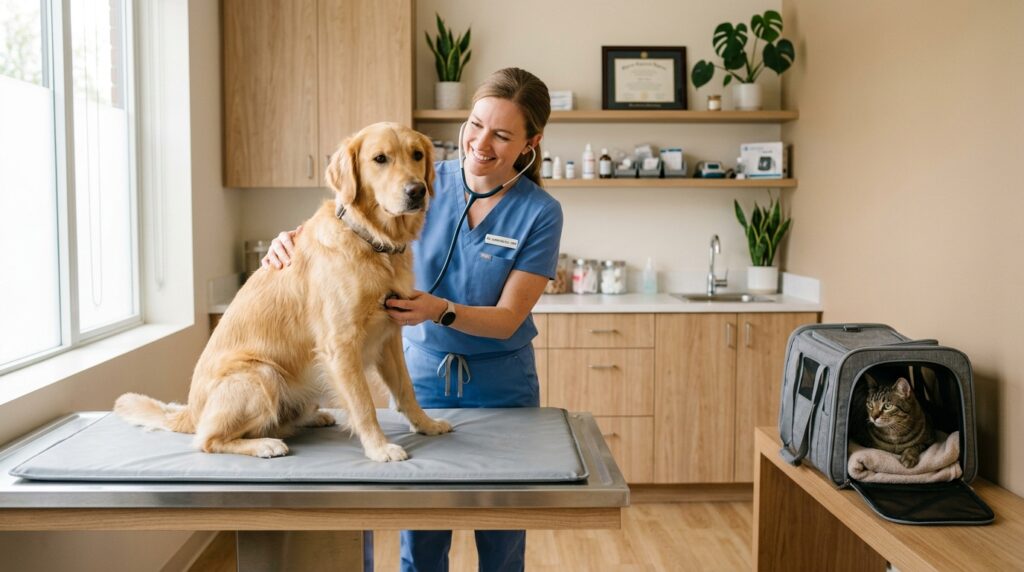
If you have searched for a vet near me in Fresno recently, you already know the real problem is not a lack of options, it is telling them apart. Dozens of clinics make similar promises, and very little on a search results page explains which practice is actually right for your dog or cat. This guide walks through how to evaluate a Fresno veterinary practice with confidence, what matters at each stage of your pet’s life, and how to separate a genuinely good small animal vet from one that simply ranks well.
What “Best Vet Near Me” Really Means for Fresno Pet Owners
The phrase gets typed thousands of times a month, but “best” is personal. The best vet for a nervous rescue cat is not automatically the best vet for a high-energy Labrador puppy. When Google decides which local clinics to show, it weighs three things: relevance to what you searched, distance from where you are, and prominence, meaning how established and trusted a practice appears online. You can borrow the same lens when you make your own shortlist.
Relevance, distance, and reputation
Relevance is about fit. A practice that clearly focuses on dogs and cats, lists the services you need, and answers common questions is more relevant to you than a bare listing with no detail. Distance matters more than people expect, because a clinic fifteen minutes away is one you will actually use for routine visits and reach quickly in an urgent moment. Reputation is the slower signal, built from years in the community, consistent reviews, and word of mouth from other Fresno pet owners.
Why local really matters for dogs and cats
Pets do better with continuity. A veterinary team that sees your dog or cat year after year learns their baseline, spots small changes early, and keeps records that make every future visit faster and safer. A nearby practice also lowers the stress of transport, which is a genuine health factor for cats in particular. Local is not only convenient, it supports better medicine across your pet’s whole lifetime.
Quick checklist: before you commit to any Fresno vet, confirm they treat both dogs and cats, offer preventive and diagnostic care in one place, have accessible appointment options, and communicate in a way that respects you and your pet. If three of those four are missing, keep looking.
Eight Things to Check Before You Choose a Vet in Fresno
Picking a practice is easier when you know what to look at. The American Veterinary Medical Association recommends using the same care you would when choosing a doctor or dentist. Here is a practical version for dog and cat owners.
- Credentials and team experience, including the lead veterinarian’s training and how long the practice has served Fresno.
- Range of services offered under one roof, from wellness exams to diagnostics and surgery.
- Cleanliness, equipment, and whether the clinic feels calm rather than chaotic.
- Appointment availability, including how quickly you can be seen when something is wrong.
- Communication style, and whether the team explains options clearly without rushing you.
- How staff physically handle and speak to your pet during the visit.
- Record keeping and follow up after appointments or procedures.
- Convenience of location, parking, and getting an anxious animal in and out.
Credentials, accreditation, and team experience
Look for a clearly identified veterinarian with real training and a track record. Voluntary standards are another signal worth understanding: hospitals that pursue AAHA accreditation meet benchmarks that go beyond basic state licensing, although many excellent independent Fresno practices deliver outstanding care without it. Experience with your specific breed, or with senior pets, is a fair thing to ask about directly.
A full range of services under one roof
Fewer handoffs usually means better, faster care. A practice that provides pet vaccinations in Fresno, spay and neuter in Fresno, pet dental care in Fresno, and in-house bloodwork can handle most of your dog or cat’s needs without sending you across town. On-site diagnostics matter most when time is short, because results in minutes rather than days can genuinely change an outcome.
Availability and same-day access
Routine care is easy to plan. The harder question is what happens when your dog swallows something or your cat suddenly stops eating. A practice that offers urgent care for pets near me gives you a first call before an emergency hospital, and often resolves the problem faster and closer to home. Ask how same-day requests are handled before you ever need the answer.
Communication and how they treat your pet
Watch the first visit closely. Good teams get down to your pet’s level, move slowly with frightened animals, and explain what they are doing and why. They welcome questions and never make you feel rushed. How a clinic treats a scared cat in the first ten minutes tells you more than any brochure ever will.
Matching the Vet to Your Pet’s Life Stage
The “best” practice also depends on where your dog or cat is in life. Needs shift as pets grow, and a good clinic adjusts with them.
Puppies and kittens
The early months are about building a foundation: a full physical, a core vaccine series, parasite prevention, and guidance on nutrition and behavior. This is also when a practice earns your trust, so notice how patiently the team answers first-time owner questions. Preventive care in these weeks pays off for years, as the AVMA’s pet care resources explain in detail.
Adult dogs and cats
Healthy adults typically need an annual wellness exam, updated vaccines based on lifestyle, dental checks, and a baseline of bloodwork so future results have something to compare against. Consistency is the theme here. Seeing the same team each year is how subtle changes get caught before they turn into serious problems.
Senior pets
Older dogs and cats benefit from more frequent checkups and closer monitoring, because conditions like kidney disease, arthritis, and dental disease are common and very manageable when found early. A practice with on-site labs and imaging can investigate concerns quickly, which spares an anxious senior pet from extra trips back and forth.
Dog vs. Cat: How Their Care Needs Differ
Dogs and cats share a lot, but they are not interchangeable patients. Understanding the differences helps you judge whether a practice truly serves both well.
| Care factor | Dogs | Cats |
|---|---|---|
| Vet visit stress | Usually tolerate travel and handling | Often highly stressed by transport |
| Hiding illness | Tend to show symptoms sooner | Mask illness until it is advanced |
| Common concerns | Dental disease, joint issues, weight | Kidney disease, urinary issues, dental |
| Preventive focus | Lifestyle-based vaccines, parasite control | Indoor and outdoor risk assessment |
| Handling needs | Positive reinforcement and space | Quiet rooms, gentle low-stress handling |
The takeaway is simple: a clinic comfortable with both species will handle a cat differently than a dog, not identically. If a practice treats every patient exactly the same way, that is worth noticing.
Red Flags to Watch For
Even a convenient, well-reviewed clinic can be the wrong fit. Watch for these warning signs during your first contact or visit:
- Staff who cannot or will not answer basic questions about services or the veterinarian’s background.
- A rushed exam where nobody explains what they found or why it matters.
- Rough or dismissive handling of a frightened dog or cat.
- Vague answers about how urgent or same-day concerns are managed.
- Pressure to commit to treatments without a clear explanation of the reasons.
None of these alone proves poor care, but a cluster of them is a solid reason to keep looking. Trust how the visit feels as much as the credentials on the wall.
A Real-World Example: Choosing a Vet Under Pressure
Consider a situation Fresno pet owners describe often. A family adopts a two-year-old cat, and a few months in she suddenly stops eating and hides for a full day. They have not chosen a regular vet yet, so they end up searching in a panic, comparing strangers while worried sick. This is the moment that reveals why the groundwork matters.
Owners who had already picked a nearby practice, met the team during a low-stakes wellness visit, and knew how same-day requests worked were able to make one call and be seen quickly. Because the clinic had a baseline on file and on-site diagnostics, the team could run tests during the visit and start treatment the same day. Owners still scrambling to choose spent hours reading reviews before they even reached a phone. The lesson is that the best time to find your vet is before you urgently need one, and a short introductory visit is the smartest preparation you can make for your pet’s health. You can meet the veterinary team in Fresno and see the full range of veterinary services long before anything goes wrong.
How to Put This Into Practice in Fresno
You do not need to visit ten clinics. Shortlist two or three nearby practices that clearly serve dogs and cats, check their services and reputation, and book a single wellness visit with your top choice. Bring any prior records, a list of questions (the AVMA offers a useful set of things to consider when choosing a veterinarian), and a note of your pet’s normal habits. Pay attention to how you and your pet are treated, how clearly things are explained, and whether the location is one you will realistically return to. If it feels right, you have found your vet. If not, move to the next name on your list.
C.H. Veterinary Clinic is a small animal practice at 2588 N Temperance Ave in Fresno, focused on dogs and cats, with wellness care, diagnostics, and same-day options in one location. When you are ready, you can book a vet appointment in Fresno or call (559) 292-7393 to get started.
Frequently Asked Questions
-
How do I find the best vet near me in Fresno for my dog or cat?
Start by shortlisting nearby practices that clearly serve dogs and cats, then compare their services, team experience, and reputation. Book one wellness visit with your top choice and judge the experience in person. The best vet is the one that fits your pet’s needs, communicates clearly, treats your animal gently, and sits close enough that you will actually keep up with regular care throughout the year.
-
What should I bring to my first vet appointment?
Bring any previous medical records or vaccine history, a list of the medications or supplements your pet takes, and notes on eating, drinking, and bathroom habits. A written list of questions helps you remember everything while you are there. For cats, use a secure carrier, and for dogs, a proper leash. Arriving prepared makes the first visit faster, calmer, and far more useful for you and the veterinary team.
-
Can I get a same-day vet appointment in Fresno?
Many concerns cannot wait for a routine slot, so same-day access matters. Ask any practice how they handle urgent same-day requests before you need one. Having a nearby clinic that offers urgent and same-day care means you have a first call when your dog or cat suddenly seems unwell, often resolving the issue faster and closer to home than driving to an emergency-only hospital across the city.
-
How often should my dog or cat see the vet?
Healthy adult dogs and cats generally benefit from a wellness exam once a year, while puppies, kittens, and senior pets usually need more frequent visits. Annual exams let your veterinarian track your pet’s baseline and catch problems early, before they grow serious. Your vet will recommend a schedule based on your pet’s age, breed, and lifestyle, so treat these numbers as starting points rather than fixed rules.
-
What makes a good small animal vet?
A strong small animal vet combines clinical skill with clear communication and genuine care for how pets feel during a visit. Look for a practice that treats dogs and cats differently rather than identically, offers preventive and diagnostic care in one place, keeps thorough records, and explains options without rushing you. Consistency matters too, since a team that knows your pet over time delivers more personalized, reliable care.
-
Is a nearby vet really better than a highly rated one across town?
Reviews are useful, but proximity often wins in practice. A closer clinic is one you will visit for routine care and reach quickly in a crisis, and both of those improve your pet’s health over time. A distant, highly rated practice you rarely visit helps less than a solid nearby one you use consistently. Balance reputation with realistic access, and weigh distance as heavily as star ratings when you decide.
Choosing your vet before an emergency is the quietest, kindest decision you can make for your dog or cat, so start that short list today.