
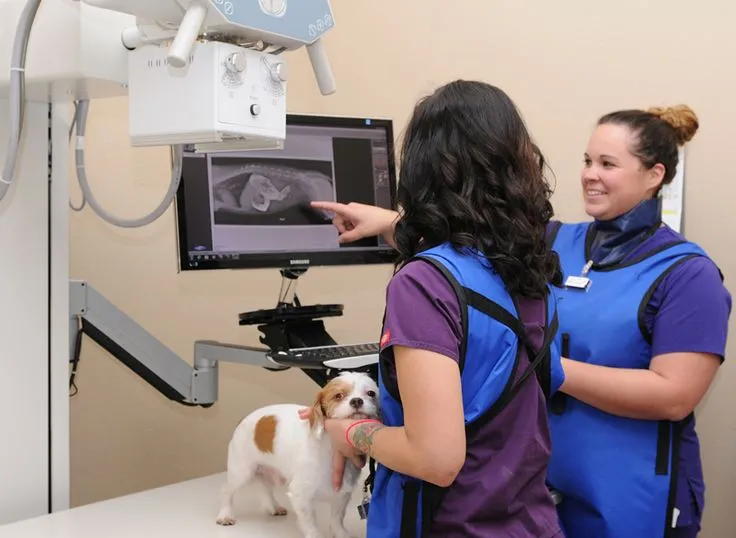
On-Site Imaging, Taken and Read the Same Visit
A physical exam tells us a great deal, but it stops at the skin. Radiography is how we see what is happening underneath: bone, organs, and the shape and position of things that should not be where they are. C.H. Veterinary Clinic at 2588 N Temperance Ave takes radiographs on site and reviews them during your appointment, so imaging does not mean a second trip to a referral facility across town.
For a limping dog, a cat straining in the litter box, or an animal that swallowed something it should not have, that difference is often the difference between treating today and treating in three days.
Fractures and Orthopedic Injuries
Broken bones, dislocations, and growth plate injuries. Radiographs confirm the fracture type, which determines whether it is splinted, plated, or referred to a surgeon.
Swallowed Foreign Objects
Bones, rocks, toys, fabric, and fishing hooks. Radiographs show the object’s location and whether it is causing an obstruction, which is the deciding factor between monitoring and emergency surgery.
Bladder and Kidney Stones
Most urinary stones show clearly on radiographs. A cat straining to urinate is one of the most urgent presentations in small animal medicine, and imaging tells us fast whether we are dealing with stones, a blockage, or inflammation.
Chest and Lung Conditions
Heart enlargement, fluid in the chest, pneumonia, masses, and collapsing airways. Chest radiographs are the standard first look for a coughing dog or a cat breathing with effort.
Abdominal Disease and Obstructions
Organ size and position, gas patterns that suggest obstruction, masses, and bladder distension. Abdominal films are routine in workups for vomiting, straining, and abdominal pain.
Arthritis and Joint Disease
Hip dysplasia, elbow dysplasia, degenerative joint disease, and spinal changes. Imaging turns a vague “he’s slowing down” into a specific diagnosis with a specific pain management plan.
Pregnancy and Fetal Counts
Late-term radiographs count skeletons, which tells a breeder how many to expect and flags a problem if whelping stalls partway through.
Dental Radiographs
Most dental disease lives below the gumline where the crown looks normal.
Call us for a radiographic evaluation if your animal is:
Fresno County generates its own pattern of imaging cases. Foxtail awns embed in paws, ears, noses, and chests and migrate through tissue, and imaging helps track down where one has ended up. Valley Fever, endemic to the San Joaquin Valley, produces bone lesions and lung changes in dogs that radiographs are central to identifying, and a limping dog in this region deserves a different differential list than a limping dog elsewhere. Rural and agricultural properties mean more dogs hit by vehicles, more encounters with farm equipment, and more animals that swallow something off the ground. Working and sporting dogs in this area also accumulate orthopedic wear that shows up long before an owner sees an obvious limp.
Most animals do not need sedation for radiographs. A calm patient in a routine position holds still long enough. Sedation gets recommended when an animal is in significant pain, when positioning requires a joint to be extended in a way that hurts, or when an anxious or fractious patient cannot be safely positioned. We discuss it with you before we do it.
Yes. Veterinary radiography uses a low dose of radiation for a fraction of a second, and the diagnostic benefit far outweighs the exposure for the occasional imaging an animal receives over a lifetime. Staff follow safety protocols including protective equipment and dose limits. Pregnant animals are handled with additional care, so tell us if there is any chance your animal is pregnant.
Often not. Many animals hold still enough for good images with gentle restraint. Sedation is recommended when your animal is in pain, when the required positioning would be uncomfortable, or when anxiety makes safe positioning impossible. We tell you before sedating, and we discuss the cost and the recovery time.
Cost depends on the number of views and the body region imaged, and whether sedation is needed. We give you an estimate before we take the images, not after. Call (559) 292-7393 for current pricing.
Usually within the same appointment. Because we take and review the images here, we can typically tell you what we see before you leave. Cases that need a board-certified radiologist’s read take longer, and we will tell you when we are sending images out for a second opinion.
No, and it is worth knowing the limits. Radiographs are excellent for bone, gas, fluid, and dense objects. They are less informative for soft tissue detail, early disc disease, and some organ interiors, which is where ultrasound, CT, or MRI come in. If your animal’s case needs imaging beyond what radiography can show, we will say so and refer you rather than guess.
Call (559) 292-7393 right away. Whether an object passes on its own or causes a life-threatening obstruction depends on its size, shape, and material, and radiographs are how we tell the difference. Do not induce vomiting without talking to us first. Some objects do more damage coming back up than going down.
Call (559) 292-7393 to schedule imaging or bring in a limping, straining, or injured animal.