
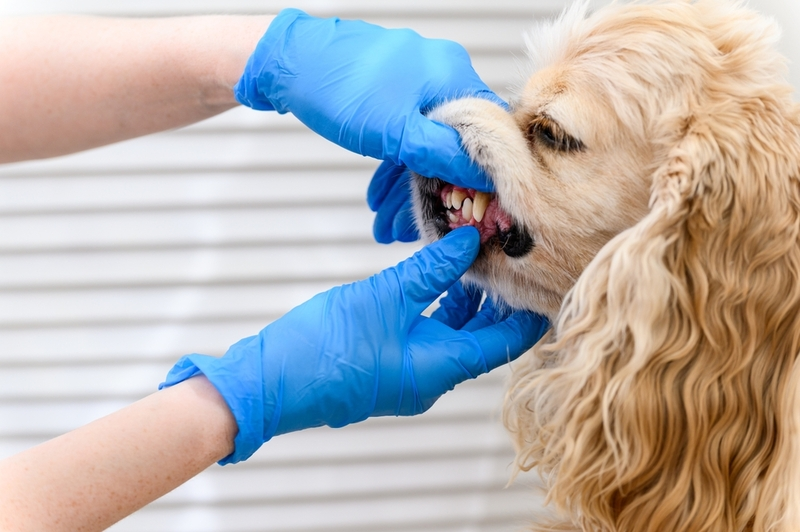
Cleanings That Go Below the Gumline, Where the Disease Actually Is
About 80 percent of dogs and 70 percent of cats over three years old have some form of dental disease. It is the most common diagnosed condition in companion animals, and it is also the one owners are most likely to dismiss, because bad breath reads as normal for a dog rather than as a symptom.
It is not normal. Periodontal disease is a bacterial infection that destroys the bone and tissue holding teeth in place, and it hurts. Animals rarely stop eating because of it. They just eat in pain and adjust, which is why owners so often report that a pet acted years younger after a dental.
C.H. Veterinary Clinic performs dental cleanings at 2588 N Temperance Ave in Fresno, including the subgingival work below the gumline where the disease lives.
Pre-anesthetic evaluation.
A physical exam and in-house bloodwork before anesthesia, so drug choices are based on your pet’s actual organ function rather than an assumption. Results come back during the pre-op process because we run them here.
Monitored general anesthesia.
A meaningful dental cleaning cannot be done on an awake animal. Scaling below the gumline, probing each tooth, and taking radiographs all require an animal that is completely still, and awake scaling only cleans the visible crown while leaving the actual disease untouched.
Full oral examination and charting.
Every tooth is probed and evaluated for pocket depth, mobility, fractures, resorptive lesions, and gum recession, and the findings are charted.
Ultrasonic scaling above and below the gumline.
The subgingival portion is the part that matters. Cleaning only what you can see makes the teeth look better while the infection continues.
Polishing.
Scaling leaves microscopic scratches that plaque adheres to. Polishing smooths the enamel back down.
Extractions when a tooth cannot be saved.
Severely diseased, fractured, or mobile teeth are removed with appropriate pain control. Pets do well after extractions and typically eat normally, often better than they did with a painful tooth in place.
Dental radiographs.
Most dental pathology sits below the gumline and is invisible on visual exam.
Recovery and home care plan.
Monitored recovery, pain medication as needed, and specific guidance on maintenance at home.
It varies widely by animal. Some dogs need annual cleanings, others go several years. Small breeds and brachycephalic breeds have crowded teeth and typically need more frequent care. Cats vary too. We assess at each wellness exam and tell you where your pet stands rather than putting everyone on the same interval.
It depends on the level of disease, whether extractions are needed, and the length of anesthesia. We provide an estimate after examining your pet’s mouth and going over the pre-anesthetic bloodwork, before anything is scheduled. Call (559) 292-7393.
Yes, and usually more comfortably than before. Most pets eat within a day, often the same evening, typically on softened food for a short recovery period. A diseased tooth causes far more eating difficulty than a missing one.
Daily brushing is genuinely the best home prevention and worth doing, and it slows the accumulation of plaque considerably. It cannot reverse existing periodontal disease or clean below the gumline. The right combination is professional cleaning to reset the mouth, then home care to extend the interval before the next one.
Call (559) 292-7393 to schedule a dental exam or cleaning.